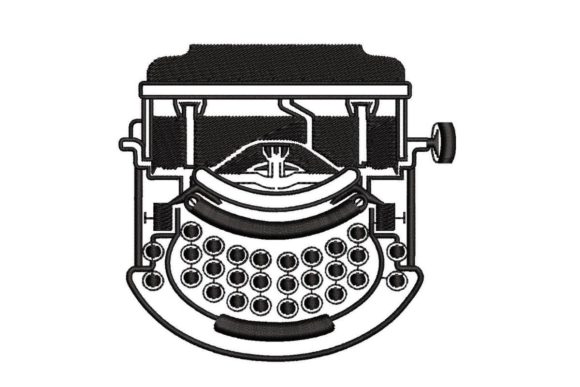
Typewriter
A Professional Embroidery Design for Small Business Merch
As an experienced embroidery designer, I’ve had the chance to review countless designs for use in small business merch. Today, I’m evaluating Typewriter, a machine embroidery design that promises great details and versatility. From the moment I first saw it, I felt it had potential beyond just home décor—it could be a powerful tool for branding and commercial use.
First Impressions: A Blend of Classic and Modern
Typewriter immediately struck me as a design with a classic aesthetic, yet it carries a modern edge. The clean lines and minimalistic approach suggest professionalism, while the thoughtful details hint at a handmade touch. It feels like something you’d find on a vintage typewriter keyboard, but reimagined for today’s creative markets.
This design is ideal for businesses looking to blend tradition with contemporary branding. Whether it's a boutique, café, or custom apparel shop, Typewriter offers a versatile look that can adapt to various brand identities without feeling too niche or too generic.
Real-World Use Cases: Beyond Decor
When considering Typewriter for commercial use, its flexibility shines through. Here are some practical applications:
- Embroidered Patches: Perfect for branded patches, especially for small businesses wanting to add a unique touch to their merchandise.
- Chest Logo Accents: Ideal for staff uniforms, aprons, or tote bags where subtle branding is key.
- Cap Embroidery: Could work well as a front design or side detail on caps, adding a professional look without overwhelming the piece.
- Tote Bag Design: A great option for custom tote bags, especially when paired with other design elements.
- Product Packaging Accents: Adds a personalized touch to product labels, gift tags, or packaging.
- Custom Apparel: Works well on work shirts, jackets, or even branded t-shirts, offering a clean and recognizable brand presence.
- Etsy Branding: Great for handmade brands looking to create consistent, eye-catching design assets.
Whether used as a standalone element or combined with other design assets, Typewriter has the versatility to support a wide range of small business needs.
Considerations for Commercial Embroidery
Before jumping into production, there are a few key factors to consider when using Typewriter in real-world scenarios:
- Small Patch Sizes: Ensure the design works at smaller scales, as patches often require compact versions.
- Cap Fronts and Curved Surfaces: Test how the design performs on curved surfaces and tight spaces.
- Tiny Lettering: If the design includes text, verify that it remains legible at small sizes.
- High Stitch Density: Check if the design handles high stitch counts without causing issues during embroidery.
- Detailed Outlines: Be mindful of intricate outlines that may not translate well to certain fabrics.
- Fabric Texture: Consider how the design interacts with different fabric types, especially textured materials.
- Dark Uniforms: Test thread color contrast on dark backgrounds to ensure visibility.
- Frequent Washing: Choose durable threads and proper stabilizers for items that will see regular use.
These considerations are crucial for ensuring that Typewriter maintains its quality and visual impact throughout the product lifecycle.
Impact on Brand Identity and Customer Trust
Using Typewriter in your branding can significantly enhance your brand identity. Its clean, classic look communicates professionalism and attention to detail—key traits for building customer trust.
Consistency is vital in brand recognition, and Typewriter offers a reliable design that can be repeated across multiple products. This helps reinforce your brand message and makes your merchandise more memorable to customers.
Additionally, the design’s ability to work on various items—from caps to tote bags—allows for a cohesive visual language across your product line. This consistency enhances the perceived value of your finished products and supports long-term customer engagement.
Practical Designer Notes for Success
To ensure the best results when using Typewriter, follow these tips from a seasoned embroidery designer:
- Test in Black and White First: This helps identify any issues with contrast or clarity before finalizing colors.
- Check Small Patch Size: Ensure the design scales down without losing definition.
- Review Thread Color Contrast: Select thread colors that stand out against the background fabric.
- Inspect Spacing: Make sure the design doesn’t overcrowd the embroidery area.
- Confirm Hoop Size: Verify that the design fits within your hoop without distortion.
- Test on Real Fabric: Always perform a test run to catch any potential issues.
- Use Proper Stabilizer: Choose a stabilizer that supports the fabric type and design complexity.
- Create a Printable Mockup: Share a digital mockup with clients for approval before production.
- Compare with Other Design Assets: Ensure Typewriter aligns with your overall brand visuals.
- Confirm Commercial Licensing: Always check licensing terms before using the design for business purposes.
By following these steps, you’ll maximize the effectiveness of Typewriter in your small business merch and branded projects.